Want more? Check out the Innovators Unscripted Bonus Round with Adam Heimlich and Sally Lee.
Chalice and Canvas Worldwide on performance, custom algorithms, and programmatic innovation
Welcome to Innovators Unscripted, a series where we share unfiltered insights from some of the most disruptive voices in today’s advertising ecosystem. Adam Heimlich, CEO of Chalice, and Sally Lee, VP, programmatic at Canvas Worldwide, join for a conversation about driving outsized programmatic performance with AI and custom algorithms.
The video transcript below has been lightly edited for clarity.
How is Canvas Worldwide working with brands to leverage custom algorithms for ad campaigns today? What can you do now that you couldn’t before?
Sally Lee: We’ve been able to advance our approach to using custom algorithms with additional data signals as well as being able to customize it more. For example, we’re working closely with Chalice to make sure we’re the ones curating the data inputs, and we understand what’s going into the algorithms.
“There’s full transparency and more autonomy when it comes to algorithms now than there was in the past.”
Why is access to rich log-level data so critical for meeting the high performance expectations that marketers are demanding today?
Adam Heimlich: Technology has gotten a lot better in the last few years, but innovation in the programmatic marketplace wasn’t moving at the speed of technology advancement. It’s now been revealed this is partly because of monopolies in the space. There are other reasons—no good reasons—but things like monopolies have kept the pace of advancement slower in programmatic.
Right now, in 2025, a lot of newer technologies are being unleashed in the marketplace. And these include the ability to process much larger volumes of data. When you can process more data, you can look at more granular data.
“Predictions used to be made off of large audience segments and entire domains with thousands of pages. But when you get into each member of the audience and each page on the internet, the predictions get better.”
Paul Zovighian: Better predictions, more efficiency. I can also say that we’ve had log-level feeds available for years, but we’re seeing more usage today than ever before. You actually now have the models and competencies required to handle all that data.
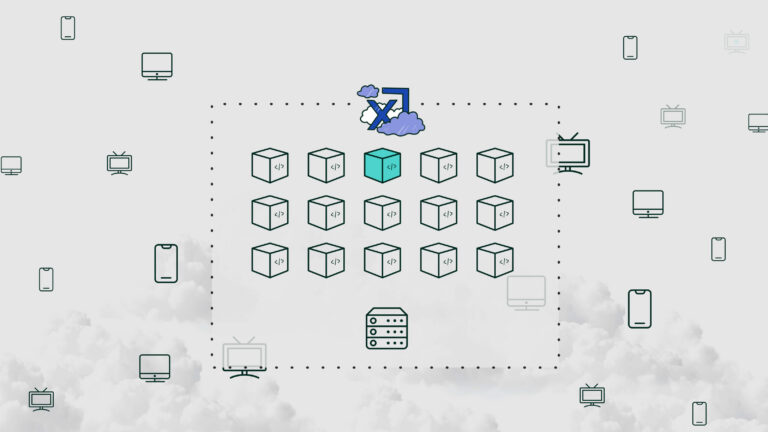
Adam, you’ve containerized your solution on the Index Marketplaces platform. What opportunities does that create for your business at Chalice, and for your customers?
AH: The opportunity we were seeking—first for Sally and her clients—was to get more granular. As I said, domains might include thousands of pages, and we were specifically looking for the ability to model individual pages.
“The idea was to find in-market customers by the pages they visit, not just by their IDs.”
There are many ID-less environments, and IDs are limited in lots of ways. So, we were searching for ways to bid on and score individual pages, which the DSPs don’t offer, at least the DSP Sally was using.
We started partnering with Index around the container idea just to get at the ability. But what containerized RTB brings is lifting many more constraints than just that one. It’s adding efficiency in a lot of other ways that are very exciting, and there are yet more advances ahead on the roadmap. People should think of it as a more efficient way to transact that removes constraints. This example of going to full page URL instead of domain is the first and a good one.
PZ: I’ve said this before, and it’s a line that maybe gets overused, but you’re using the scalpel rather than the sledgehammer to fine-tune. We love that.
There’s a lot of buzz around curation. What’s something that people still misunderstand?
SL: In the programmatic space, curation has always been part of the process. Even seven years ago, we were curating deals.
AH: Manually.
SL: Manually. The difference now, to Adam’s point, is that it’s a lot more automated.
“We’re able to feed in more real-time data signals to make sure we’re curating in real time based on a more complex set of parameters.”
So it’s not just curating based on, say, news sites, but the individual page level on those news sites and the content that’s available.
AH: Sally gave the bright side of curation. But there’s also a shadow side to curation, in that it reintroduces undisclosed margins into the marketplace after we’ve spent the last five or seven years stamping them out. So where in most agencies, you can’t get away with an undisclosed buy-side margin, now there are all these curation houses getting away with undisclosed sell-side margins. That’s very unfortunate, and I think it’s going to take another multi-year effort to get rid of it. It’s something that could be much more efficient, but unfortunately, it’s being used to hide costs and fees.
PZ: This is where, as a platform, we always want to make sure we have that control, so there is that choice on the table for companies to be transparent and share exactly what’s happening under the hood.
Sally, can you share a success story? What kind of outcomes have you seen from activating custom AI models on the sell side?
SL: All the questions you’ve asked led to this question. We recently had great success with a product Chalice came out with, which is called CurateAI, where we’re able to curate page-level deals for our clients as well as feed in additional performance signals.
“For one of our clients, we saw 5X efficiency. At the same time, we were able to make sure that we were delivering on quality sites and quality pages.”
PZ: Amazing. You’re getting outsized performance—5X is nothing to scoff at—without compromising on quality, which is really the ideal balance to strike.
AH: It’s very rare in programmatic to do better with more expensive media and prove that out. It’s having that granular data and the ability to use the scalpel that allowed it to happen, so it’s exciting.
SL: The interesting takeaway was that even though we did see higher CPMs, there were obviously more quality users and pages. We were able to drive better efficiencies, which we hadn’t seen as much in the past.
PZ: You get outsized outcomes, which makes the ROI better, even if the CPM is higher. You can’t look at it in a vacuum.
AH: That’s the way it works in most markets. You pay a premium, you get a premium product. But programmatic had been broken for a while, where the worst inventory was eliminated, but there was no ability to see any bands of quality above that. Now we’re starting to get there.
How do you see AI reshaping the future of ad tech?
AH: It’s been different every year. We were an AI company for two or three years before OpenAI came out and started all this buzz. There’s so much attention around text prediction that people are sick of it and feel like it’s being forced on them, and the hype is too much.
But I encourage people to look at other markets besides text prediction, like working as we do in quality prediction or purchase prediction. Some of these are quantitative. Some of these have to do with language, but it’s not a chatbot.
“It’s about getting better predictions out of your data and getting more value out of your owned data and creative assets.”
I think these are better ways to think about it than what does it replace and can it be a human? These questions are more philosophical. What’s happening in the business world right now is that the summarization functionality you see with chatbots is being applied to large datasets. Brands are finding out the secrets that their data tells about their customers, and finding out where the bargains are in programmatic marketplaces on a cost-per-value basis.
That’s how I think people should think of it: getting power and signal out of large datasets.
PZ: So it’s not necessarily about replacing a function, but making you more competent and effective at that.
AH: Exactly. There might be tough decisions in the future about what should be automated or replaced with AI, but there’s no question in business about what should be automated—like pricing for items on a certain day or shipping logistics, things that machines are clearly better at.
It’s going to take years to get the machines going at that, and it’s going to be a good thing. We don’t need to wring our hands about AI replacing creativity.
PZ: Right. Especially when we’re talking in the context of computation or analysis of something that happens hundreds of billions of times. No human should be doing that.
What would you say is the biggest challenge brands face in programmatic today, and what needs to happen to help solve it?
SL: One of the biggest challenges right now is fragmentation. We were moving towards a place of more universal identifiers and being able to transact more openly, but now we’re moving back into the lockboxes. It’s difficult when it comes to measurement.
Adam mentioned log-level files earlier—to make those files impactful or meaningful, we need to tie it to some sort of endpoint. And if we don’t have the identifiers to do that, we can’t. We need better measurement solutions that bridge the gap.
What’s the biggest shift you see coming in the next 12 months?
SL: There’s going to be more focus on streaming and CTV—and on better ways to measure and target. We’ve explored contextual targeting within the CTV space. It hasn’t gotten where we want it to be, I think, as an industry. There’s a lot more room for innovation there.
AH: I think it’s sell-side decisioning, not to play on the home field. I’ve been selling advanced technology for six years, really focused on buyers. But now I find myself selling it more on the sell side. There’s more interest on the sell side in adopting advanced technology.
“That’s going to result in a big comeback for publishers who are daring to take a chance on it and have more advanced decisioning for their buyers.”
Learn more about how you can activate intelligence on the sell side and drive stronger outcomes with sell-side decisioning.