Sam Bloom on the benefits of sell-side decisioning for agencies
Welcome to Innovators Unscripted, a series where we share unfiltered insights from some of the most disruptive voices in today’s advertising ecosystem. Sam Bloom, head of partnerships at PMG, joins for a conversation about building customized solutions for brands, the value of sell-side decisioning, and where AI is already showing up across programmatic advertising.
Here are the takeaways that stuck with us.
Sell-side decisioning reduces signal loss on the way to the impression
For Sam, programmatic innovation is about improving the ecosystem for all stakeholders, especially consumers. On the media side, that starts with closing the distance to the impression.
“I want to get as close to the impressions I possibly can, and I want to bring the intelligence to that… I want to remove layers of things that don’t add value.”
Sam Bloom, Head of Partnerships
PMG
Every additional hop in a media transaction introduces latency and signal loss. Sell-side decisioning brings decisioning closer to the source of supply, giving media buyers like PMG access to richer signals, which fuels stronger outcomes.
For agencies in particular, that means making media decisions with stronger signals earlier in the transaction, rather than relying on data and intelligence that has already lost value by the time it’s applied further downstream. Sam believes this is only effective when it benefits media buyers and media owners alike.
Customization powers stronger sell-side decisioning for brands
As an agency leader, Sam believes customization creates greater opportunities for personalization. Brands want technology built around their own business and customers, and PMG’s focus is on building bespoke solutions personalized to each client rather than applying the same playbook across every account.
Personalization sharpens the data behind every media transaction and campaign, and that intelligence doesn’t have to stay on the buy side. Sell-side decisioning brings it upstream, closer to the source of the impression, giving buyers confidence in the signals they can leverage and outcomes they can drive.
Index Cloud elevates sell-side decisioning to the next level
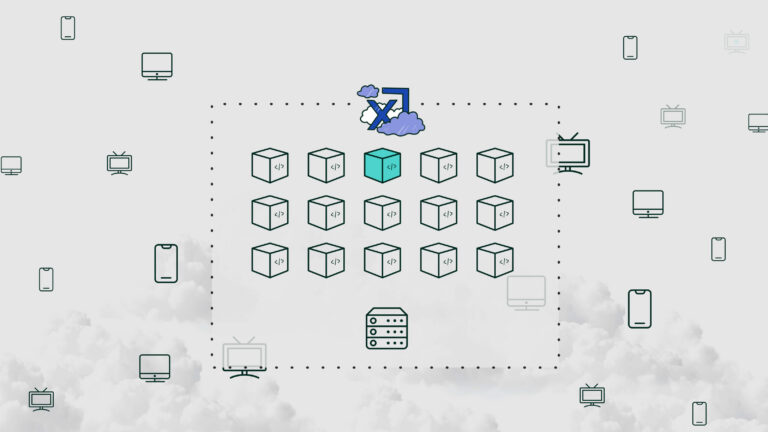
Containerization is one of the more advanced applications of sell-side decisioning. Instead of routing decisioning to public cloud infrastructure and waiting for it to return before an auction can proceed, containers let companies run their own code directly inside the exchange. This cuts the added cost and latency of processing everything externally.
Index Cloud, Index’s neutral compute environment built inside its own infrastructure rather than the public cloud, is where that shift is happening. For PMG, that means customization built into every campaign, automation running alongside it, and intelligence woven through both, all inside Index Cloud.
Sam points to Index’s partnership with the DSP Bedrock Platform as a clear example of what containerization makes possible. By hosting its bidder directly inside Index’s own infrastructure, Bedrock lowers the cost and complexity that would otherwise limit how much of the auction it can compete for.
“I think [containerization creates] a bigger internet for us, for all intents and purposes.”
Sam Bloom, Head of Partnerships
PMG
For PMG, Index Cloud provides more opportunities to build automation and intelligence into campaigns without the infrastructure restraints of a public cloud. This opens up more access to supply across the open internet without filters, ultimately empowering brands’ campaigns with stronger outcomes.
AI is reshaping programmatic advertising for the better
AI isn’t limited to a singular use case for programmatic advertising. It’s a key part of nearly every programmatic channel and workflow.
“AI to me is a little bit like oxygen. It’s kind of in the air, and it’s just about everything.”
Sam Bloom, Head of Partnerships
PMG
AI is showing up across PMG’s business in many ways. Internally, automation is freeing Sam’s teams from mundane, repetitive work so they can spend more time on strategy and creative work for brands. For PMG’s clients, AI is moving into everything from creative production, to landing page optimization, to informing and enhancing the consumer journey.
One AI area Sam is watching closely is how rich data is embedded directly in creative assets. Combined with a deeper read on contextual environments, he sees this becoming a data layer that could prove more durable than other signals marketers have relied on.
Brand and performance aren’t mutually exclusive
There shouldn’t be a tradeoff between brand building and driving measurable outcomes. In a perfect programmatic world, brand and performance coexist together for marketers and agencies with the responsibility of creating something that resonates with consumers. If they do that well, brand and performance both follow.
“You could have the best media plan in the world, but if you’re selling something that doesn’t resonate with the consumer, it’s not going to work.”
Sam Bloom, Head of Partnerships
PMG
Agencies don’t control every aspect of a campaign, but they do spend a significant amount of time helping their clients build something meaningful for consumers. For Sam, that is crucial for bridging the divide between brand and performance. Campaigns that resonate with consumers will build the brand and drive results simultaneously.
See how sell-side decisioning helps agencies get closer to the impression, preserve signals, and drive better business outcomes.