For years, most programmatic decisioning has lived on the buy side, far from the moment an ad opportunity begins. That distance matters more as streaming TV brings premium, signal-rich inventory into programmatic.
Sell-side decisioning shortens that distance by bringing intelligence—models, data, and decision logic—closer to where impressions originate and signals are richest. And now with AI, advertising decisions can draw on these richer signals in real time, giving marketers more precision with less waste and media owners greater control over their supply.
At Advertising Week New York, we hosted a panel moderated by Michelle Aragon with Index’s SVP, platforms and partnerships, Catherine Patterson, and leaders from Gracenote, LG Ad Solutions, and WPP. Together, they explored why sell-side decisioning is gaining traction industrywide and what it takes to make it work at scale.
One point kept resurfacing throughout—agencies, marketers, media owners, and tech providers each hold valuable intelligence, and the biggest gains come from collaboration.
Why sell-side decisioning is gaining momentum now
Catherine pointed to two shifts contributing to the rise of sell-side decisioning. The first is intelligence itself. Algorithms have grown far more sophisticated as every member of the ecosystem brings their own models and data to the table. Devon DeBlasio, global head of GTM, data and technology solutions at WPP, sees it firsthand on the agency side, with decisions getting faster and smarter as better signals feed them.
The second is the capability to bring that intelligence closer to the ad opportunity. Why does that matter? For years, intelligence sat downstream, so every ad opportunity had to travel from the media owner, to the SSP, to the DSP, and back before a decision could be made. Every hop added distance between the intelligence and impression, which introduced extra costs, latency, and signal loss.
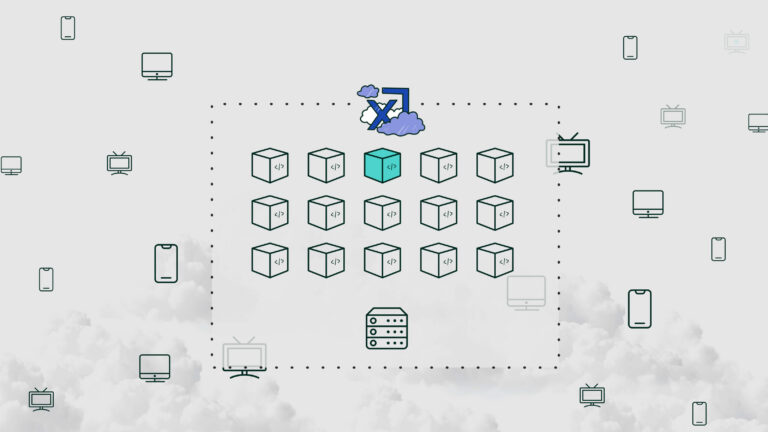
Now, intelligence can run closer to the source of impressions, where signals are richest, so models can act the moment an impression becomes available, before the bid opportunity heads to the DSP.
“Distance is cost in all that we do… The more that we can reduce that distance, the less cost, the more value, the more choice, the more performance.”
Catherine Patterson, SVP, Platforms and Partnerships
Index Exchange
What sell-side decisioning changes for programmatic advertising
When intelligence sits closer to the impression, each side of the media transaction can do more with what it knows. Agencies understand a client’s objectives. Media owners understand their audiences and supply. Sell-side decisioning brings those strengths together, creating smarter, more efficient, and more open connections between the buy and sell sides.
That connection is already taking shape. For Devon, an agency’s strength lies in stewarding client goals and working directly with media owners, pairing their data with agency intelligence to uncover new audiences for marketers and new value for media owners.
“Our role…right now is to find the needle in the haystack, both from the buyer side and from the seller side.”
Devon DeBlasio, Global Head of GTM, Data and Technology Solutions
WPP
Catherine shared that sell-side decisioning also gives buyers more choice about where a decision can be applied to drive optimal outcomes. For example, buyers can tell their media owner or supply partners what audiences they’re looking for—even niche audiences such as Monday Night Football viewers who like sci-fi and fashion—and either receive a pre-curated set that their DSP can then decision against or have decisioning run at the impression to find their audience with less distance and less cost.
As Andrew Tint, VP, platform partnerships at LG Ad Solutions, noted, streaming publishers bring valuable insights, such as first-party viewing data and an understanding of the bid rates a deal needs, which can help buyers find the most relevant opportunities and optimize their campaigns ahead of launch.
How richer streaming TV signals improve sell-side decisioning
Streaming TV is a natural proving ground for sell-side decisioning with premium, fragmented supply and room for automation and interoperability to take root. It’s also a channel where supply-side intelligence fills a critical gap and creates a path for more granular content signals to travel upstream. As Bill Michels, chief product officer at Gracenote, explained, those signals cover more than which show is airing, down to the genres and moments that matter to buyers.
“If you’re a data owner or if you have a data asset, you’re going to build an algorithm around that. You now have a way to interact with the supply that you weren’t allowed to before. It makes it seamless.”
Bill Michels, Chief Product Officer
Gracenote
Sell-side decisioning is especially impactful in live sports, where ad breaks create millions of concurrent opportunities that DSPs can’t ingest due to queries-per-second (QPS) caps. Applying intelligence upstream means DSPs can receive just the most relevant opportunities.
dentsu X recently put this contextual intelligence to work for Dos Equis, activating Gracenote metadata through Index Marketplaces. This ultimately resulted in 84% of impressions running during live College Football Playoff games, with CPMs coming in 7% below benchmark.
Where agentic AI fits into sell-side decisioning
More partners bringing intelligence to supply means, as Andrew puts it, more cooks in the kitchen. Devon sees sharper tools on every side, from stronger models to more ways to test and learn before spending a dollar.
AI agents add to both the opportunity and the complexity. On the sell side, agentic models can learn from performance signals like win rates, revenue, and creative effectiveness to make impression-level choices.
“The true power of AI is actually making the buys that we have today much better, smarter, more efficient, more streamlined, and at the same time much more complex.”
Andrew Tint, VP, Platform Partnerships
LG Ad Solutions
Whether agents can help the ecosystem harness all this intelligence depends on the industry’s commitment to adopting standardization. The Agentic Real-Time Framework (ARTF), an IAB Tech Lab standard that Index helped pioneer, gives partners a consistent way to run their own logic inside the exchange. Bill described a world where ARTF lets buyers choose among many algorithms, while a walled garden offers only its own. Devon also shared how WPP is helping build open-source rules for how buyer and seller agents work together.
“If you can have a model that can see the entirety of the open internet, that makes that model significantly smarter and gives it so much more choice that I think fundamentally changes the game.”
Catherine Patterson, SVP, Platforms and Partnerships
Index Exchange
But standards are only half of what it takes to make sell-side decisioning work at scale. The other is feedback loops. Andrew emphasized that media owners get little feedback on how a campaign is performing. Meanwhile, marketers are responsible for outcomes, yet platforms hold much of the evidence. Closing that loop and deepening collaboration can improve optimization across all partners.
What buyers should expect from their partners as sell-side decisioning scales
As more intelligence moves closer to the impression, media buyers should hold their partners to a higher standard. The panelists each offered a starting point.
- Differentiated intelligence: Bill suggested buyers should look for powerful, unique algorithms that walled gardens can’t offer.
- More choice: Catherine shared buyers should ask what opportunities a partner’s models are seeing today and what more choice could do for a campaign.
- Shared intelligence: Andrew discussed sharing intelligence so both sides can optimize, and Devon emphasized the importance of protecting the value of buyer intelligence.
- Humans in the loop: Devon urged buyers to invest in talent and keep humans in charge of final decisions before money is spent.
Programmatic intelligence once sat far from the supply side. Today, sell-side decisioning brings it closer to impressions, so every member of the ecosystem can contribute their own models, data, and logic.
When this happens, we can unlock reduced costs, richer signals, and better outcomes for media buyers and media owners alike—along with a more competitive, healthier open internet.
See how sell-side decisioning works and what it can deliver for your business.