Want more? Check out the Innovators Unscripted Bonus Round with Tony Marlow.
LG Ad Solutions’ Tony Marlow on the innovations redefining the streaming TV experience
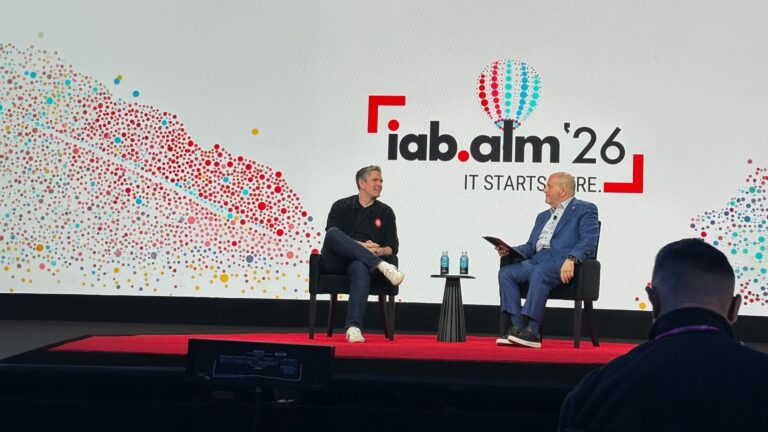
Welcome to Innovators Unscripted, a series where we share unfiltered insights from some of the most disruptive voices in today’s advertising ecosystem. Tony Marlow, CMO of LG Ad Solutions, joins for a conversation about streaming TV’s evolution into a performance storytelling platform, the rising demand for relevance, and the collaborative innovation shaping the future of connected viewing.
The video transcript below has been lightly edited for clarity.
As more consumers shift from traditional television to streaming, how are viewing and content discovery behaviors evolving?
Tony Marlow: This is a huge question. I’m going to rewind a little bit to answer it. There’s this concept that we call the big shift. And if you cast your mind back to early 2020, the pandemic is hitting and most countries are following stay-at-home guidance. We know people were staying at home, they started watching more television, and they started streaming more.
But what happened was back then, it was largely characterized by subscription streaming. What we’ve seen since then is this big shift towards ad-supported models of connected TV (CTV).
“It’s interesting, most consumers—certainly in the US, Canada, UK, and Australia—have a high level of favorability, 70% or above, for the ad-supported model.”
So in terms of that shift, it’s the shift to streaming, firstly just adoption, and now the shift to ad-supported models.
There’s growing interest in interactive and shoppable ad formats. How are you innovating beyond the typical 30-second slot to help marketers really move the needle?
TM: If we were having this conversation last year, I would have said 2024 is the year of shoppable. And in some ways, that was true. But in 2024, shoppable was trapped within the QR code. What we’re seeing now is greater innovation in creating more frictionless purchases.
What 2024 taught us was it’s not really necessarily about the tech. It’s about consumer attitudes and willingness to make the purchase.
“Three or four years ago, people weren’t really willing to try and buy something on the TV. They weren’t necessarily willing to merge that large-screen experience with the screen in their hand. Now they’re doing all of that.”
I like to think of connected television as what we call a performance storytelling medium, meaning that it’s a full-funnel medium.
“You can build your brand, but you can also convert. That’s one of the wonderful things about CTV.”
Alex Gardner: I have yet to buy something off my TV. Have you tried it?
TM: I was experimenting a little bit, not necessarily with our stuff, but with Amazon putting some of the football games on, you can drop things straight into your inbox or your cart. I thought it was really cool.
With consumers’ attention more fragmented than ever, how are you using AI and data to connect content, ads, and audiences and deliver an impactful streaming experience?
TM: I love this question. Maybe I can quiz you for a second. How long do you think it takes between turning your TV on and ultimately landing on something to watch?
AG: Eleven minutes.
TM: You knew this—it’s about 10 minutes.
AG: I’ve heard you speak on this before!
TM: That 10 minutes is incredible. There’s one portion of this that you’ll never get rid of, the debate that happens on the couch. I want to watch A, I would like to watch B. But then there’s this other component, where it’s just, I can’t find the content that I would like to engage with.
What’s really interesting about this moment in time is that there are two tails here. One tail is of discovery. How do we enhance the discovery experience for the content and for the non-content experiences—the cloud fitness, the cloud gaming, shoppable moments? How do you bubble that up?
I think the answer is pretty solidly artificial intelligence and being able to use AI to bubble up those relevant pieces of information and do so at the glass level, meaning on the home screen and not trapped within given streaming apps. We’re starting to see that.
The other tail is endemic home-screen advertising. You’ve got a captive audience. They’re spending about 10 minutes just making a decision. They’re also in a very shoppable mode for that moment. So they’re either really willing to see ads about content, or they’re really willing to see ads about making a purchase.
And so AI content discovery and AI for advertising match are really big right now.
Streaming TV is maturing quickly. What’s one thing marketers need to understand to stay ahead?
TM: Streaming TV is not your grandmother’s TV. It’s so much more than a 30-second spot.
Yes, we have fifteens and thirties, but you can do more. You can use triggers, for example, weather triggers.
“Say you’re a national retailer. You can use a weather trigger to make sure that the stock that you’re highlighting is always relevant to the conditions at hand.”
Knowing the IP address of a television and that it’s raining outside, you see raincoats. Maybe it’s hot outside, it’s t-shirt and shorts weather.
This is all considered completely privacy-safe. You don’t need to know that much about an individual to know, okay, they might be interested in wet weather gear right now. And that’s just a simple example. I like to use that one because it’s so easy to wrap your arms around.
This is all considered completely privacy-safe. You don’t need to know that much about an individual to know, okay, they might be interested in wet weather gear right now. And that’s just a simple example. I like to use that one because it’s so easy to wrap your arms around.
But the technology that’s available to make sure the right ad is reaching the right person at the right time, it’s stronger than ever before and it’s really being unlocked right now.
The other thing I like to say about this topic is that connected TV is the sight, sound, and motion that we’ve always loved about television, but we’ve now added the addressability that we’ve come to need and love from digital channels.
Collaboration is crucial to driving innovation in this industry. How does our partnership help you deliver enhanced value to both viewers and marketers?
TM: I like that you’re using the word collaboration because there’s no individual company that I think is changing the game for everyone.
“Between our companies, and between many—it’s a collaboration to try and create a better ecosystem.”
When we say better, I think we’re creating great content and lean-in experiences on the biggest screen in the home. And, we’re creating great advertising experiences. Because if you’re getting something for free—for us, that would be something like our LG Channels FAST service with 350 channels—the content is free because it’s ad-supported.
“The least we can do is make sure those ads are relevant and make sure that they’re impactful. That’s one thing that we collaborate very well on.”
With seemingly infinite content available to stream today, how do you think about your FAST channels and the streaming experience you create for viewers?
TM: This is interesting. I was talking about this in a meeting earlier today.
“I look at LG Channels and other FAST channel services as a way of curating the best of the best.”
If you think about the major networks, they might be releasing new content, and maybe it’s a hit, maybe it’s not. One of the really interesting pieces about FAST is that it’s aggregating both current and historically really successful content.
Whether you’re talking about “Suits,” or the “Baywatch” channel, which is one of the most popular channels on LG Channels and now fully remastered in 4K and reimagined, I like to think of it as a collection of the best of the best.
I was speaking with someone in this meeting, and he was telling me about his college-aged son who had never seen “Friends” before. He’s starting to watch it now, and for him, it’s first-run, premium content.
These are the types of streaming experiences you can expect out of FAST right now.
AG: We just watched in my household, with the children, “Malcolm in the Middle” for the first time in their experience. We’ve been binging it for the last several months, and they’ve been loving it.
We break down all the complexities of programmatic streaming TV in our Index Explains video series. Tune in to learn how to make the most of your streaming investments.