Streaming TV pause ads have moved beyond the novelty stage, emerging as one of the clearest areas of alignment across the streaming ecosystem. Buyers see strong potential for brand engagement and recall, while streaming publishers see an opportunity to unlock incremental revenue without disrupting the viewer experience.
So why hasn’t scale followed?
To find out, we surveyed both media buyers and streaming publishers. The results reveal a market where intent and infrastructure are out of sync. Buyers are ready to invest, and streaming publishers are ready to monetize, but the operational infrastructure required to scale the format programmatically is not yet in place.
Buyers are ready to invest in pause ads
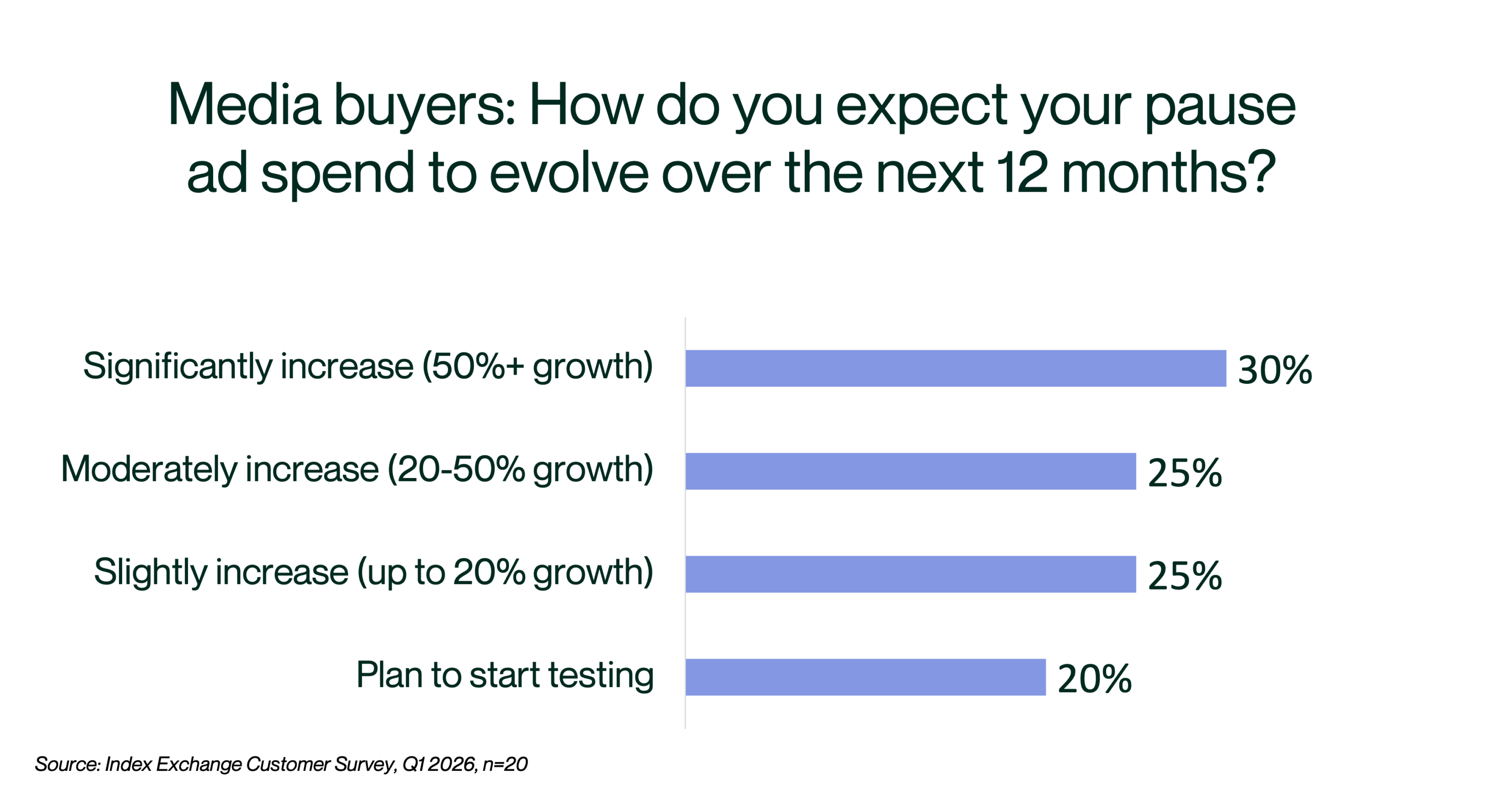
Interest in pause ads has moved well beyond experimentation. Across the agencies and DSPs we surveyed, 80% said they expect to increase pause ad spend over the next year, with more than half expecting spend to increase by at least 20%.
That interest is being driven by the format’s ability to capture attention without interrupting the viewing experience. Pause ads appear when a viewer intentionally pauses the content they’re watching, creating a full-screen, viewer-initiated moment that feels more natural and less disruptive than traditional instream advertising.
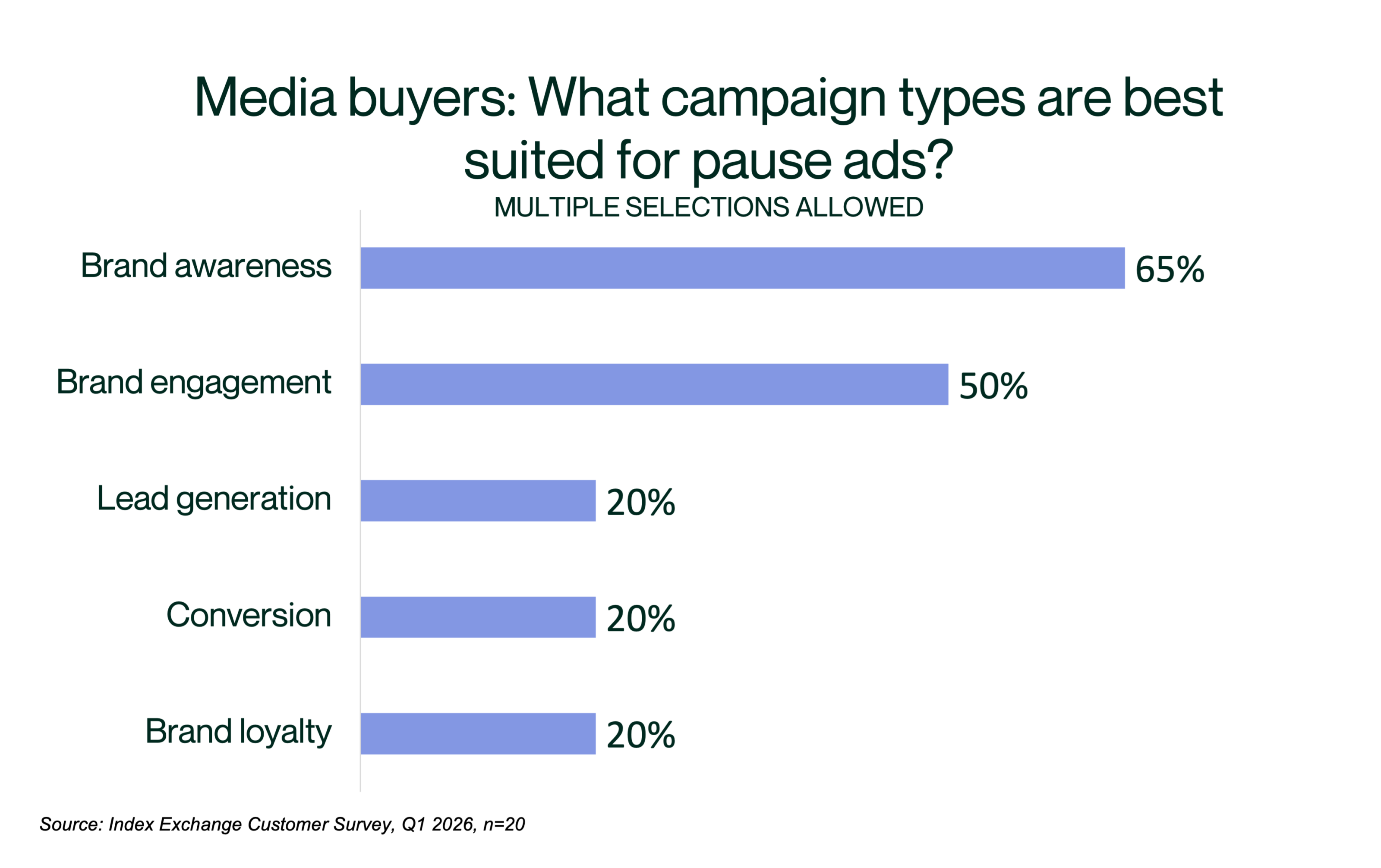
Buyers today overwhelmingly associate pause ads with upper-funnel objectives like brand awareness and engagement. However, interactive and QR-enabled creatives are expanding the format’s potential for commerce and direct response outcomes as well.
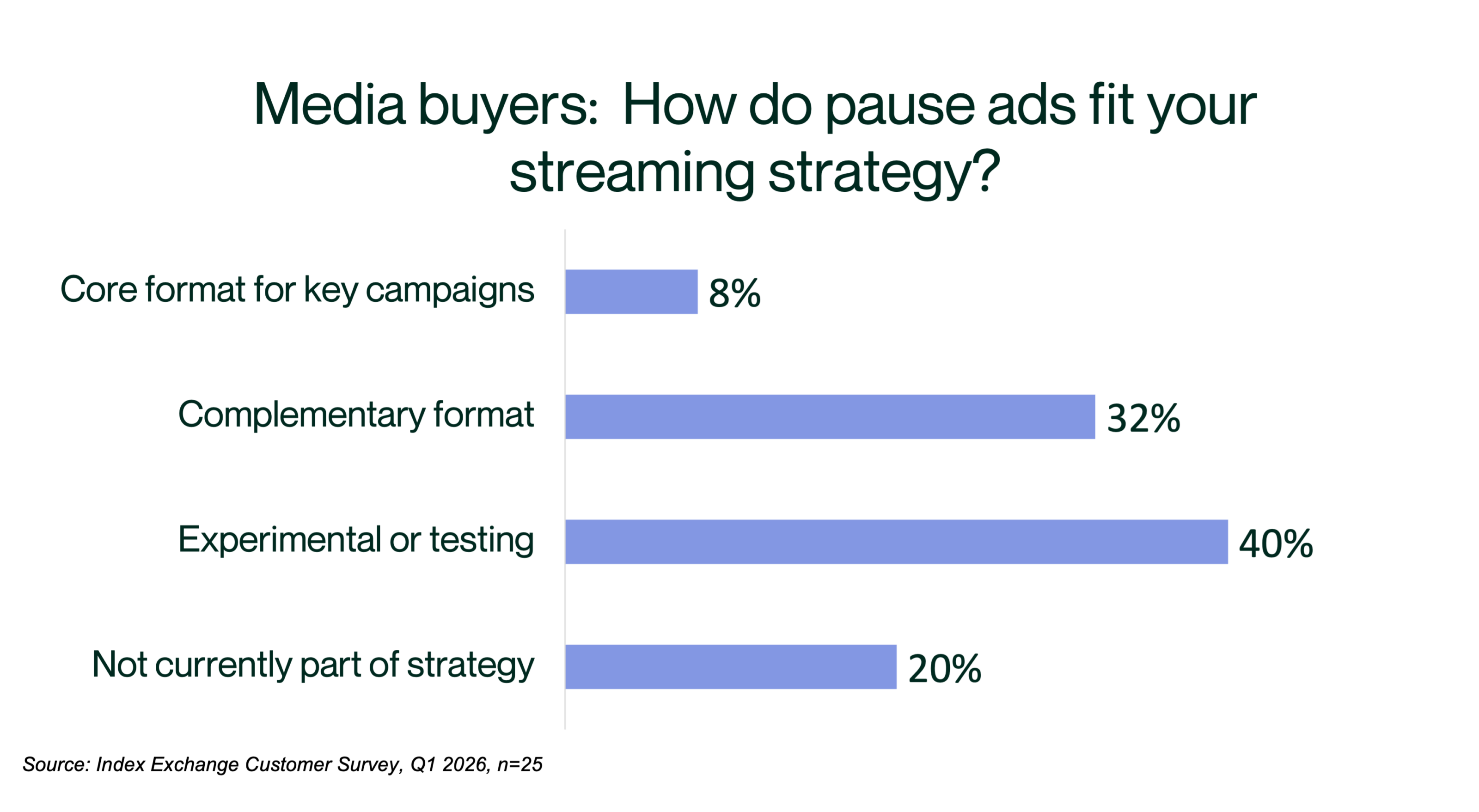
Even with those benefits, buyers are still determining how pause ads fit within broader streaming TV strategies. While investment is expected to rise over the next 12 months, most media buyers still classify the format as experimental or complementary to broader streaming buys.
Streaming publishers see opportunity
Streaming TV publishers are also optimistic about the format, but many still treat pause ads as controlled, limited inventory rather than a scalable monetization channel.
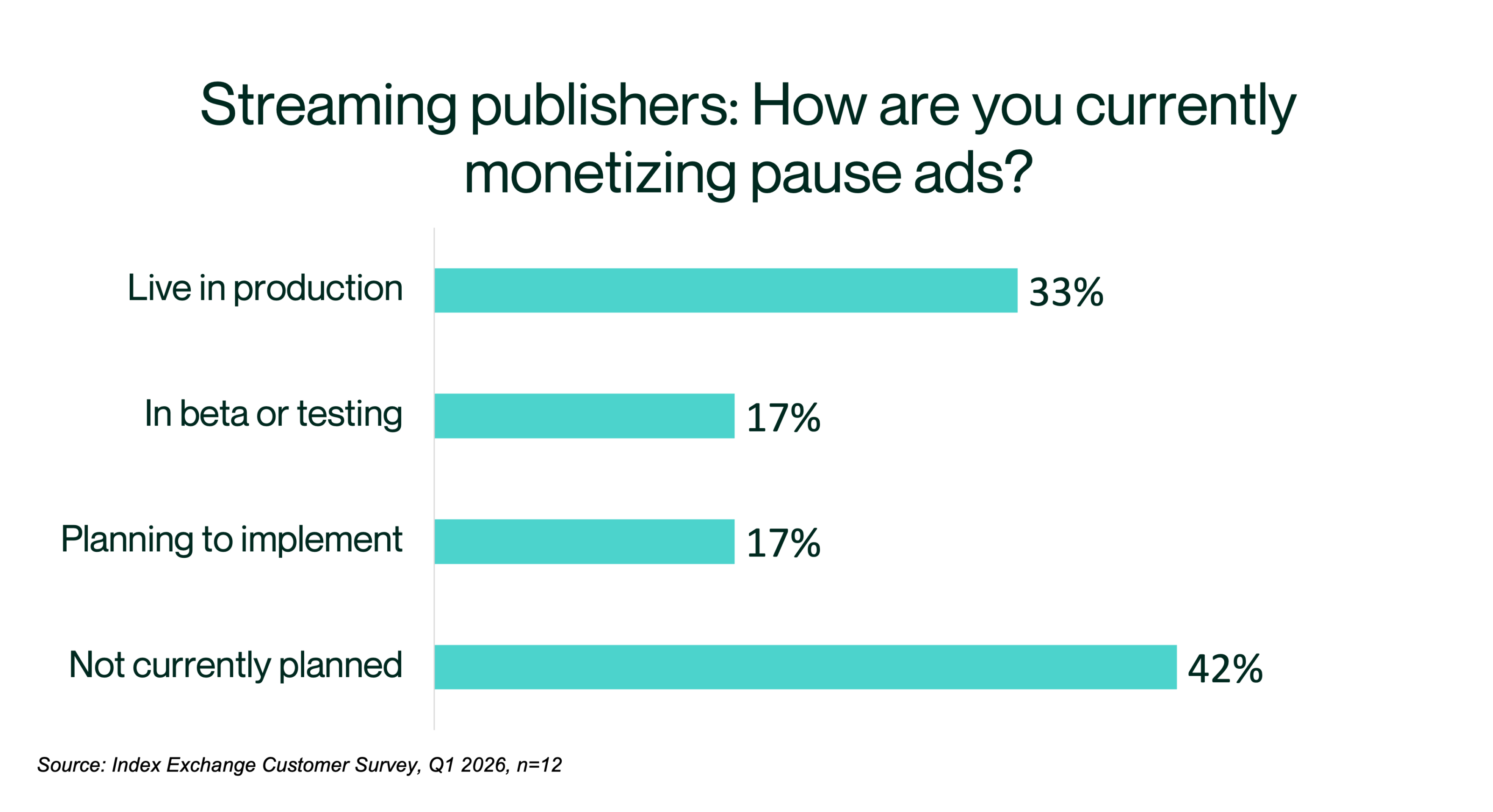
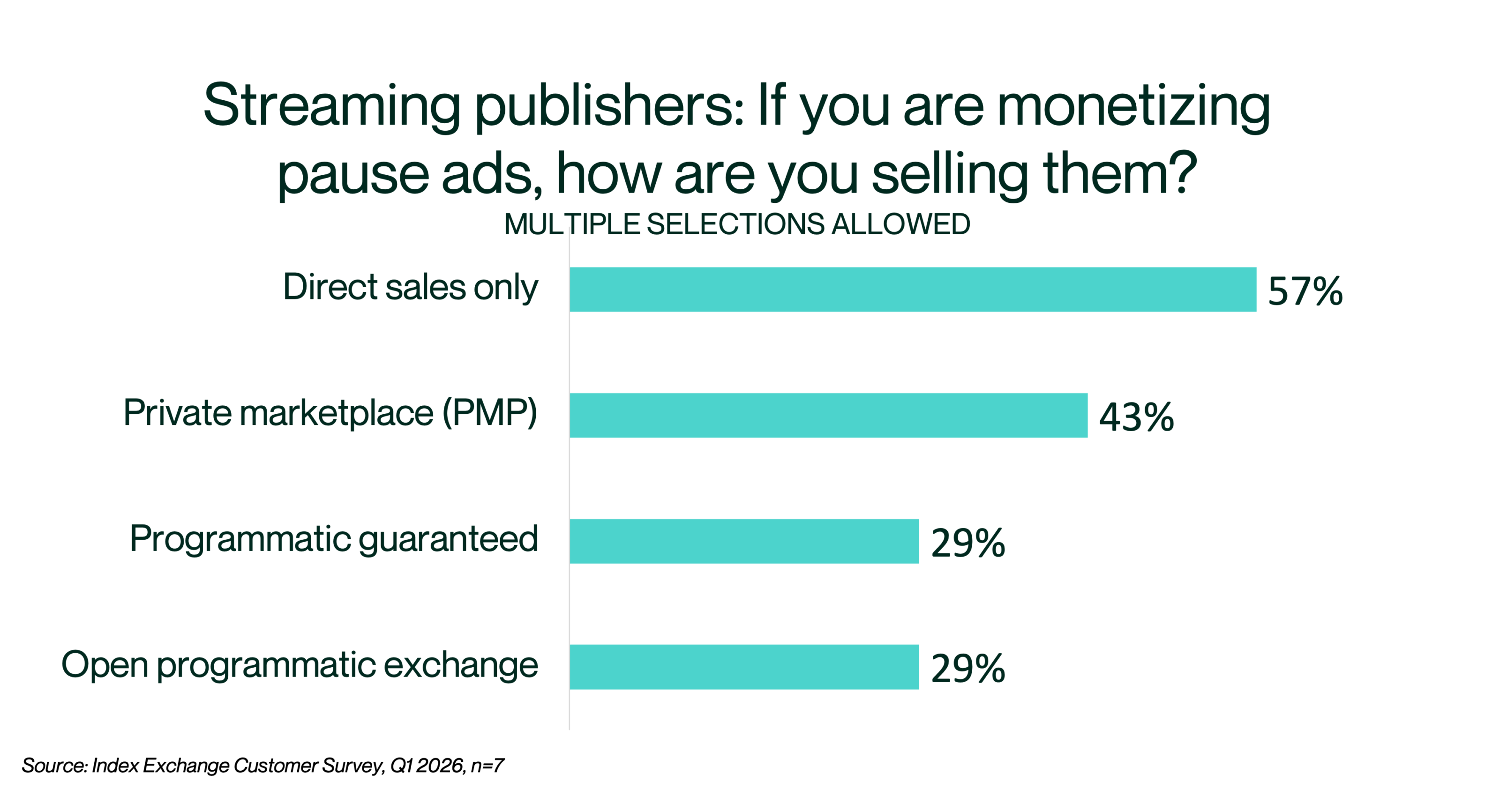
Roughly two-thirds of the streaming publishers surveyed are either already live with pause ads or are testing and planning implementations. Among those currently monetizing the format, most still rely primarily on direct sales rather than open programmatic activation.
That’s not due to a lack of interest in programmatic demand. Instead, many streaming publishers point to complex technical integrations and inconsistent activation paths as key barriers to scaling.
What’s holding back scale
While buyers and streaming publishers approach pause ads from different sides of the transaction, they’re identifying many of the same barriers to scaled adoption.
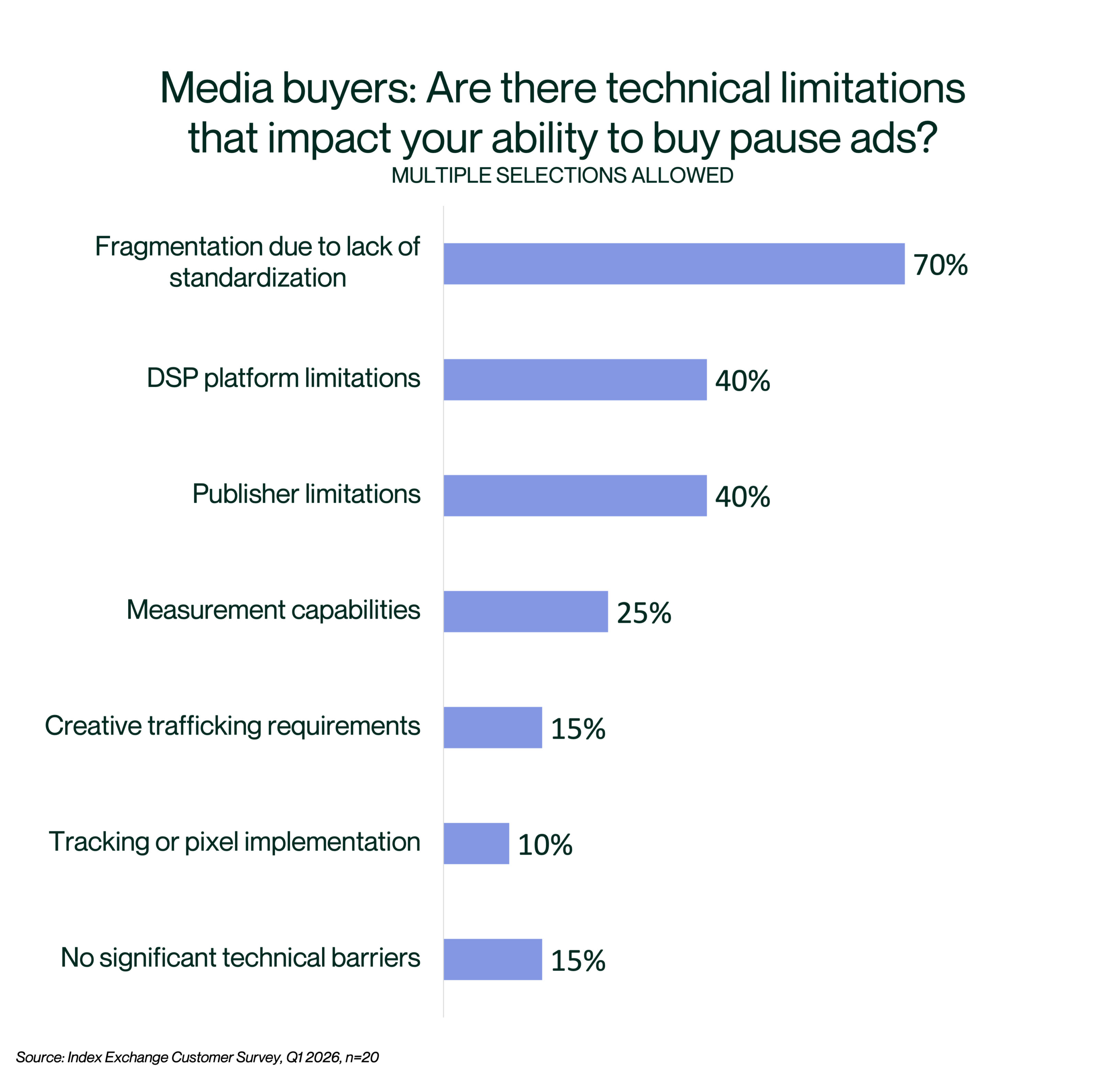
For buyers, the biggest challenge is fragmentation. Seventy percent of respondents cited a lack of standardization as the primary obstacle to scaling pause ads programmatically. Other commonly cited challenges included inconsistent creative specifications, limited inventory visibility in the bidstream, DSP limitations, and publisher-side technical constraints.
Streaming publishers echoed many of the same concerns, including technical integration complexity, lack of standardization, ad server limitations, and inconsistent buyer demand.
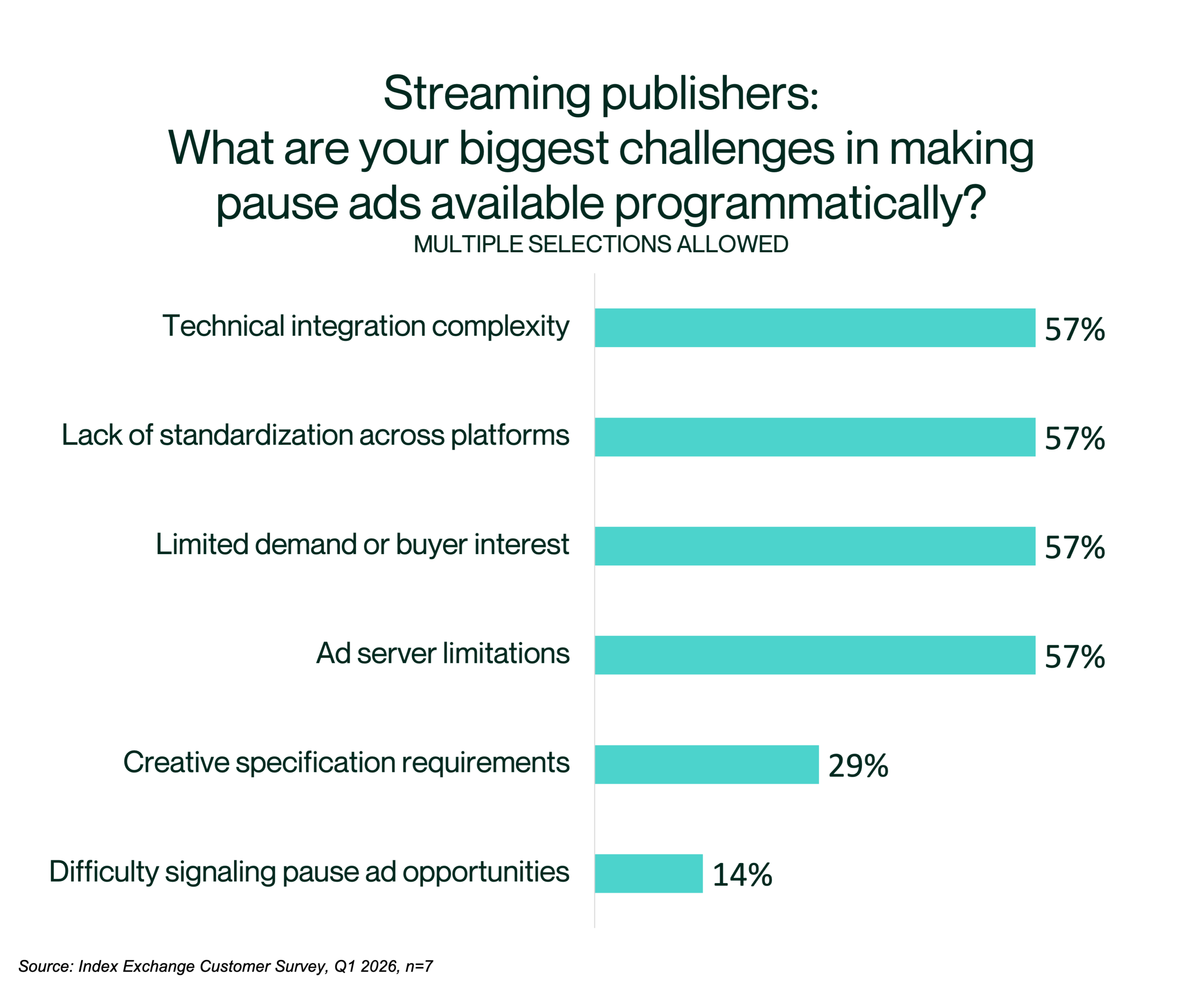
That alignment matters because it suggests the industry’s biggest challenge is interoperability, not demand.
Today, pause ads often require custom workflows. Inventory is not consistently identifiable in the bidstream, creative requirements vary across platforms, and many campaigns still rely on direct sales or private marketplaces rather than scalable open programmatic activation.
The result is a fragmented market that’s creating misaligned expectations around pricing and value.
Many of the buyers we surveyed expect pause ads to transact below a $15 CPM, while most streaming publishers value the format in the $15–$25 CPM range or higher.
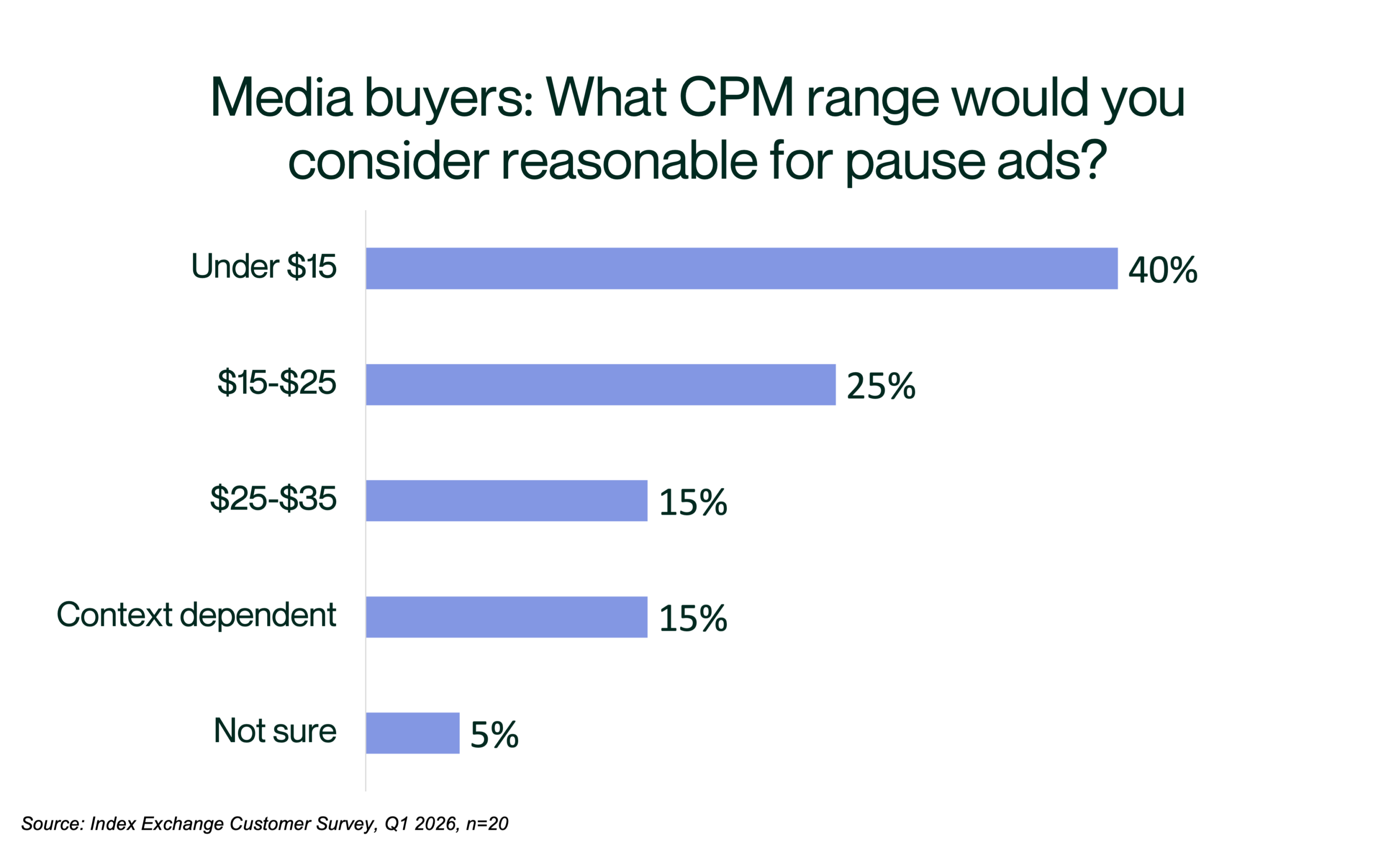
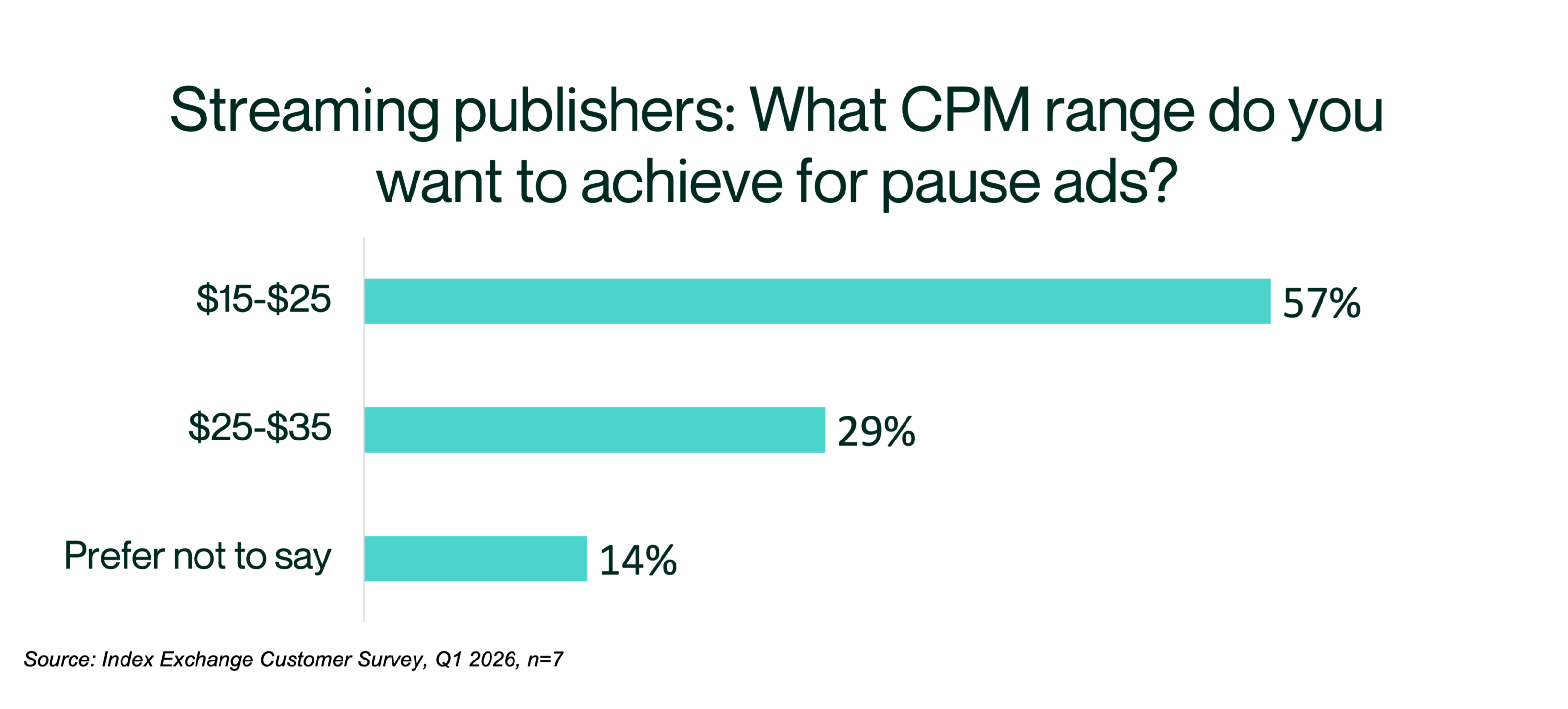
That gap is likely being driven less by disagreement over the format’s potential and more by friction within the current supply chain.
Creative translation layers, inconsistent delivery specifications, and indirect transaction paths all add operational cost and complexity. At the same time, the market still lacks standardized benchmarks for evaluating pause ads against other streaming TV formats.
Closing that gap will require two things:
First, the industry needs clearer standards for pause ad signaling, creative delivery, and programmatic workflows. Standardization reduces operational friction and creates more consistent buying and monetization paths across the ecosystem.
Second, it needs stronger performance benchmarks and measurement frameworks that reflect the unique characteristics of pause ads—including extended time on screen, viewer-initiated engagement, and QR-enabled interactions.
Together, those developments will help create greater confidence in how pause ads are valued, bought, and scaled.
Advancing standards for pause ads
Emerging ad formats only scale when the ecosystem can transact on them consistently. That’s why standardization is one of the most important next steps for pause ads in streaming TV.
The IAB Tech Lab’s CTV Ad Portfolio and broader work around pause ad signaling are helping establish clearer standards for how pause inventory is identified, transacted, and rendered programmatically.
Index Exchange has been actively contributing to that work, authoring the pause ads section of the New CTV Ad Format Signaling and File Delivery proposal alongside industry participants from across the streaming ecosystem.
The proposal introduces clearer bidstream signaling and creative standards, a critical step toward creating the consistency and interoperability required to scale the format programmatically across the industry.
The path to scalable adoption
The research makes one thing clear: Buyers and streaming publishers both see strong potential in pause ads. Consumers are receptive to the format, marketers are preparing to increase investment, and streaming publishers are looking to scale monetization opportunities that preserve the viewer experience.
The challenge is not demand. It’s creating the infrastructure, standards, and activation pathways needed to support broader programmatic adoption.
To address these challenges and build on the momentum already underway, we recently expanded support for pause ads across inventory from leading streaming services, including DIRECTV, Foxtel, Philo, and Plex. This work helps scale the format through greater simplicity, efficiency, automation, and standardization, enabling buyers to activate the format with confidence and giving media owners the flexibility to innovate and better monetize their inventory.
“Marketers are prioritizing streaming environments that capture attention without disrupting the viewing experience. Pause ads strike that balance—delivering a high-impact moment that aligns with how audiences naturally engage with content. With programmatic access through Index, we can layer in data-driven targeting and measurement, making it easier to test, scale, and integrate this format into broader streaming strategies.”
Susan Schiekofer, Chief Media Officer, US
WPP Media
As the industry aligns around clearer standards and scalable programmatic workflows, pause ads will become easier to activate and measure across streaming TV environments.
See how you can make the most of the programmatic opportunity in streaming TV with Index Exchange.