If you work in programmatic advertising, you can’t go anywhere without hearing about agentic AI. But adoption is still early, and confidence in how to get real value from it is low. A recent Digiday and Optable survey found that only 18% of companies feel ready to start scaling agentic advertising.
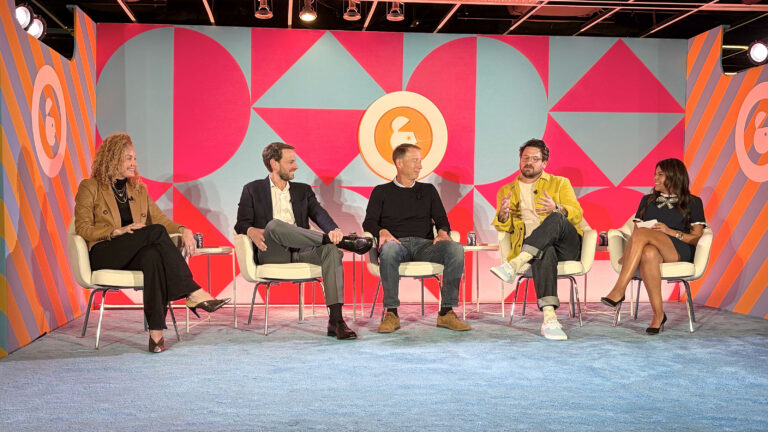
At our latest Index Explains Live event, leaders from dentsu, DIRECTV Advertising, Omnicom, and WPP Media joined Catherine Patterson, SVP of platforms and partnerships at Index Exchange, to cut through the noise and talk about where agentic AI is delivering value for marketers today.
Teams are already seeing benefits from specific, well-governed tasks like campaign monitoring, inventory discovery, and media planning. And while agentic buying at scale hasn’t materialized yet, the groundwork is laid for stronger data foundations, interoperability between agents, and new measurement tactics.
Where programmatic teams are experimenting with agentic AI today
For Elizabeth Harden, head of biddable strategy and activation at WPP Media, skill-based agents have outperformed general-purpose ones. Campaign monitoring is a standout use case, with agents watching live campaigns, flagging anomalies, and offering hypotheses on why performance shifts. Another is audience research, which once took weeks and now takes a single query.
Jen Scheel, EVP, head of precision and connected standards at dentsu, has taken a similar approach, piloting a DSP’s ads agent on active campaigns. Building campaigns with the agent cut setup time dramatically, and the pilot campaign improved cost per booking by about 40%.
“We found that we could do that 40% faster when using the agent. That’s huge. That’s more strategic time for our team. That’s more problem solving and less troubleshooting.”
Jen Scheel, EVP, Head of Precision and Connected Standards
dentsu
Agentic AI is also changing how media owners work with buyers. Tyler DeNicola, head of programmatic at DIRECTV Advertising, sees inventory discovery as the biggest opportunity in streaming TV. DIRECTV Advertising’s live TV offering reaches homes as well as bars, restaurants, gyms, airlines, and hotels. Those formats transact differently because the signals available on each are different, but agentic planning can bring all of that into a single plan a buyer builds against one KPI.
Governance is essential as agentic advertising improves
The more capable an agent becomes, the more it needs guardrails that let humans monitor and approve its actions.
“You need humans in the loop everywhere for every task. I don’t think any task should be fully autonomous, and I think as the agents get more and more advanced, it almost makes governance even more important than it was before.”
Elizabeth Harden, Head of Biddable Strategy and Activation
WPP Media
Soren Godfrey, chief client solutions officer, North America at Omnicom, sees the most sophisticated buyers experimenting where the risk is low and the learning is high, like workflow automation and inventory discovery. They’re building trust with agents before letting them make decisions, especially ones involving campaign budgets.
One way to earn that trust is to have agents review each other’s work. For example, Elizabeth pointed to having one agent dedicated to building campaigns while a second handles governance. A human who understands the campaign’s objectives still gives final approval.
Interoperability decides whether agentic advertising scales
The forward-thinking marketers Soren works with are shoring up data quality, identity, and interoperability so their teams are ready to run agentic workflows as the technology matures.
“Nobody’s waiting for perfect, and perfect isn’t coming. Everyone is building an agentic model, and no one is all going to handshake at some point and say that’s the one we’re all agreeing is perfect for us.”
Soren Godfrey, Chief Client Solutions Officer, North America
Omnicom
WPP Media is taking a similar approach, building its buyer agent on IAB Tech Lab frameworks and in close collaboration with media owners. Agents have to talk to each other, and closed environments work against that.
Jen points to sell-side decisioning as one agentic AI use case where this is already working. dentsu is partnering with companies like Index to bring decisioning closer to supply, which is driving value that wasn’t possible a year ago.
Agentic AI will challenge programmatic measurement
Agentic systems can assess an audience, available inventory, and a business outcome at the same time and far faster than humans. Soren describes a bottom-up approach where media buyers start with who they want to reach, what inventory they can buy today, and the outcome they need to drive.
That puts pressure on marketers to re-evaluate the frameworks they trust today, including marketing mix modeling (MMM), multi-touch attribution, and incrementality, because those models were built to support top-down planning. With agentic AI, buyers can feed results into a measurement model instantly and improve campaigns while they’re still running. The key is to use those faster learnings to shape how marketers measure success going forward.
Agencies and brands must start preparing their teams for the future of agentic advertising
Experimentation and collaboration will determine how fast agentic advertising scales. Soren emphasizes making AI core to the job, bringing clients and junior team members along the way, and setting clear expectations for how teams use and disclose it.
For Tyler, that includes giving the next generation hands-on experience. Many of today’s industry leaders became experts by working through the routine tasks AI is now taking on, and junior team members still need that same foundation.
A disciplined framework for evaluating new capabilities, paired with a governance plan, can help junior buyers understand what is happening before they hand work off to an agent.
Looking further out, the panelists expect the industry conversations around agentic AI to change. Jen sees measurement frameworks catching up so marketers can invest in agentic opportunities with confidence. Tyler expects the conversation to turn from experimentation to evidence, including what AI actually costs to run.
“We’re so new right now that no one really has clear results on how this is working… I think next year that’ll be a topic of learning on our failures [and] our successes.”
Tyler DeNicola, Head of Programmatic
DIRECTV Advertising
The other shift is about people. Brands will lean on their agencies to learn how peers are approaching agentic AI, which Soren sees as a core part of the job ahead. As agents mature, Elizabeth expects the question to move from what they can do to how we manage them, which means creating new roles like an agent coordinator, or other roles that no one has even thought about yet.
Agentic advertising adoption is still early, but the opportunity is clear for every side of the industry. The teams defining use cases, adopting proper governance plans, and rethinking measurement now will shape the next phase of agentic AI in programmatic for everyone.
Explore what the future of agentic AI in programmatic looks like and how you can start creating value today.