As agents and model-driven systems begin to participate in programmatic auctions, one thing is clear: Innovation can’t come at the cost of interoperability or trust.
That’s where the Agentic Real-Time Framework (ARTF) comes in.
Developed by IAB Tech Lab with contributions from across the ecosystem, ARTF brings modern, containerized execution to OpenRTB. It enables intelligent systems to operate securely within the auction environment, unlocking new real-time capabilities without breaking the systems our industry already relies on.
At our latest Index Explains Live event, leaders from DoubleVerify, IAB Tech Lab, Gamera, and Omnicom Media joined Index Exchange CTO Ray Ghanbari to unpack what this means in practice and why it marks a turning point for real-time decisioning.
Solving the speed challenge, securely
Programmatic transactions complete in 300 to 500 milliseconds. Yet even the most sophisticated large language models cannot reason fast enough to operate at that pace. ARTF solves that challenge.
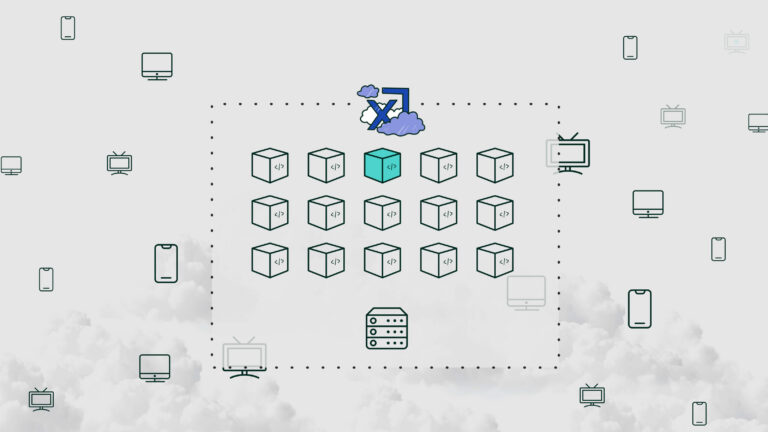
By enabling containerized execution directly within the exchange, it allows AI agents to enrich and influence the bidstream in real time, which wasn’t previously possible at scale.
“The challenge was, how do we get these very powerful LLMs to be able to influence media buying and selling in real time? ARTF solves for that. It solves for the ability for agents to enrich or modify the bidstream, both on the request and even the response, if necessary.”
Tony Katsur, CEO
IAB Tech Lab
But the framework required solving for more than speed. A lot of the development work centered on determining how to safely inject agents into the bidstream. And that’s not just to protect the bidstream and the hundreds of billions of transactions running through an exchange, but also to protect the agents.
“People don’t want their data leaking. They don’t want their algorithms leaking. They don’t want their competitors to see it, they may not even want the exchange that they’re hosting in to be able to see these things. A lot of the protocol, and the reason it’s a framework, is [to enable] this interaction in a way which is safe and contained.”
Ray Ghanbari, CTO
Index Exchange
This creates an environment where agents can operate with maximum impact without risking system stability or exposing proprietary technology.
Enabling real-time enrichment on the supply side delivers stronger outcomes
ARTF enables true real-time decisioning, deployed where it can create the most value: upstream on the supply side, where bid requests are unfiltered and data is richest.
Sell-side decisioning delivers better reach and drives stronger ROI, as buyers can access and optimize against broader swaths of inventory before it’s filtered downstream.
“Once the request gets to the DSP, we lose signal fidelity. So, integrating on the SSP side, we have access now to the unfiltered bid requests, and we’re able to make smarter decisions on richer data sooner in the lifecycle and reduce media waste for our clients.”
Amanda Carlton, VP of Product
DoubleVerify
Agencies like Omnicom have already seen success bringing decisioning to the sell side. Containerization through ARTF creates even more opportunity as the improved speed and efficiency affords more time for enrichment and optimization at the impression level.
“Knowing that we’ve already had such great success with the pipes as they are, to be able to have more time for enrichment and understanding that impression-level value is going to end up being really groundbreaking for marketers that are able to take advantage of it.”
Jean Fitzpatrick, EVP, Commercial Strategy
Omnicom Media
Standardized containerization lowers barriers to innovation
For years, accessing the bidstream has been prohibitively difficult for solutions providers. That stymied innovation as many ad tech companies weren’t able to integrate regardless of how transformative their technology may have been.
ARTF changes that. With standardized containerization, companies can build once and deploy their technology securely across environments without needing dozens of bespoke and costly integrations.
“There are just so many things that could have been built in the past 10 years that weren’t, because getting into the hot path was so hard. And now I anticipate things are going to flourish.”
Gareth Glaser, CEO and Co-Founder
Gamera
Standardization also makes it much easier and faster to test solutions across vendors. That’s a win for the whole ecosystem. Agencies and buyers can seamlessly test new solutions, gaining flexibility to match the right solution to a specific use case or customizing a mix of solutions to deliver stronger ROI. Vendors can more easily sell and scale their solutions as ARTF eliminates the integration barrier.
And when it becomes easier for companies to bring new solutions to market, it accelerates innovation and competition, making for a healthier ecosystem.
“Standardization is really important, because we have clients with really incredibly complicated campaigns that can never be run on one platform or with one partner. The more standardization there is, the easier it is for us to take use cases and manage those across many, many partners so that we can have a holistic campaign.”
Jean Fitzpatrick, EVP, Commercial Strategy
Omnicom Media
A future built on testing, interoperability, and scale
While programmatic’s agentic future is still in the early stages, ARTF lays the groundwork to realize the promise of agentic real-time decisioning.
Without standards, every agentic deployment becomes a custom integration. ARTF establishes common protocols that work across implementations, creating a build-once, deploy-everywhere model.
It represents more than a technical upgrade. It’s a fundamental shift in how programmatic advertising enables innovation while preventing fragmentation.
See what the next phase of agentic AI and sell-side decisioning means for the future of programmatic.