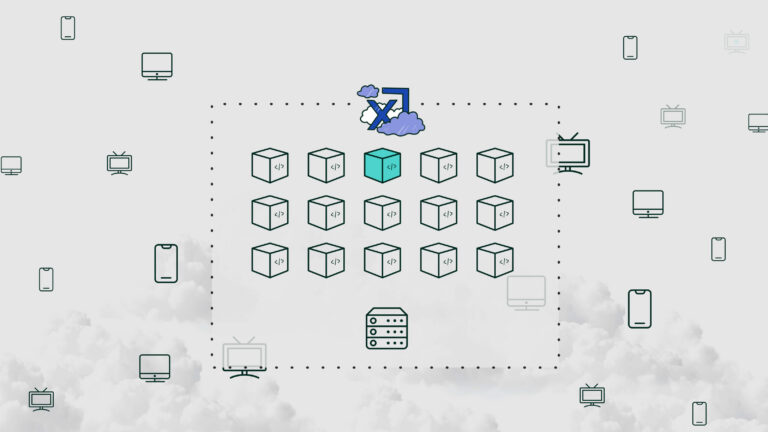
The programmatic industry is moving quickly to advance agentic and AI innovation. At Index Exchange, our focus is not on adding to the noise. It is on bringing clarity to how this shift works in practice and how we, as an industry, make it valuable for the open internet.
Digital advertising has always been built on multi-party transactions. Every impression brings together buyers, sellers, media, consumers, platforms, data, and measurement in real time.
This happens trillions of times a day, across nearly every country and digital property in the world. It works because we share a common set of standards that make those interactions fast, transparent, and trusted at global scale.
Agentic AI introduces a powerful new participant into that system.
Software agents will increasingly act on behalf of marketers, media owners, and their partners to help plan, activate, optimize, and analyze campaigns with a level of speed and precision that was not previously possible.
But more participants mean greater complexity.
This moment is not just about a step-function increase in innovation. It is about a step-function increase in interoperability, and most importantly, responsibility.
Extending what works: Raising the standard for agentic interoperability
The programmatic ecosystem does not need to be rebuilt for an agentic world. The foundation is already in place and proves its worth trillions of times a day.
For more than a decade, industry standards like OpenRTB, the common language for real-time transactions, have enabled independent companies to collaborate in real time. They define how transactions occur, how outcomes are measured, how signals are shared, and how compliance is maintained.
Those standards are the reason the open internet can compete at scale.
Advancing those standards has been a long-standing commitment for Index Exchange. And now, as an active contributor to the Agentic Real-Time Framework (ARTF), we’re bringing real-world experience from live container deployments inside our exchange to help shape how agents can operate safely and efficiently in the transaction. Through our work with the IAB Tech Lab and industry partners, that hands-on experience helped turn a technical concept into a practical, interoperable standard already being applied in live transactions.
The ARTF is the next step in that evolution.
It creates a consistent way for intelligent decisioning to happen closer to the transaction, while preserving the performance, control, and transparency the ecosystem depends on. Not by replacing what exists, but by modernizing how it works and enabling agents to constructively and safely participate in RTB transactions.
From complexity to clarity
Without shared standards, agentic systems risk amplifying the very challenges the industry is trying to solve. A supply chain that is difficult to see today does not become clearer when it includes hundreds of automated decision points.
Transparent interoperability is what prevents that challenged future.
It ensures that every participant, whether human or machine, operates with clear signals, defined responsibilities, and measurable outcomes.
It also ensures that decisioning closer to the impression benefits the media owner. Increasing the intelligence applied to an impression increases its value, translating better infrastructure directly into stronger monetization.
At Index Exchange, this belief is grounded in real-world implementation. Running live agentic containers fully integrated into our exchange for partners has shown us that moving decisioning closer to the core real-time transaction drives meaningful gains in efficiency, performance, and signal quality.
Those learnings directly informed the development of the ARTF, ensuring the standard reflects what actually works at scale in live auctions, not just what works in theory.
Raising the standard is a shared responsibility
As more automated decisioning enters the transaction, transparency, auditability, and controls become even more critical, not less.
This is where our exceptional standards vision comes to life at Index, and where our responsibility as an industry leader matters most: contributing to the infrastructure and collaboration that allows the open internet to operate with greater trust and accountability.
Agentic AI will accelerate everything. Workflows will move faster. Optimization will become continuous. The number of entities participating in each transaction will grow.
Standards are what ensure that this acceleration leads to better outcomes rather than more fragmentation.
Building the next phase together
The Agentic Real-Time Framework reflects how this industry has always made progress: companies solving real problems in practice, and then working together through organizations like the IAB Tech Lab to define a common path forward.
The future of programmatic is not a choice between human and machine decisioning. It’s a choice between disconnected innovation and coordinated intelligence.
If we get interoperability right, agentic AI will make the open internet more efficient, more transparent, and more performance-driven than ever before.
That is how we continue to raise the standard for the entire ecosystem, together.
Learn what the next phase of agentic AI and sell-side decisioning means for the future of programmatic.